
Spring Bean作用域与生命周期
大约 2 分钟
一、Spring Bean生命周期
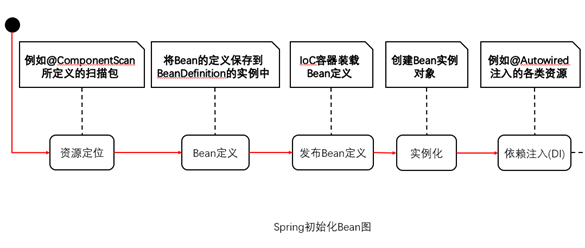
解释:
Spring 通过我们的配置,如 @ComponentScan 定义的扫描路径去找到带有 @Component 的类,这个过程就是一个资源定位的过程。
一旦找到了资源,那么它就开始解析,并且将定义的信息保存起来。注意,此时还没有初始化 Bean ,也就没有 Bean 实例,它有的仅仅是 Bean 的定义。
然后就会把 Bean 定义发布到 Spring IoC 容器中,此时,IoC容器也只有 Bean 的定义,还是没有 Bean 的实例生成。
在默认的情况下,Spring会继续去完成Bean的实例化和依赖注入, 这样从IoC容器中就可以得到一个依赖注入完成的Bean。但是,有些Bean会在取的时候才初始化和依赖注入。如下图:
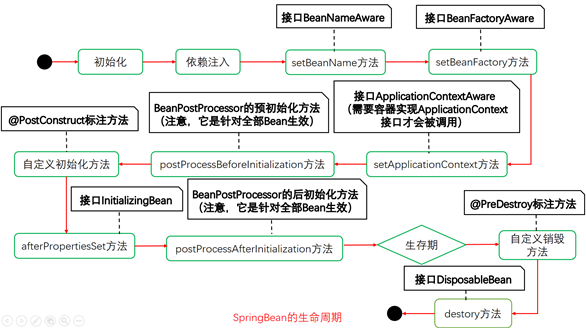
解释:
- 其中流程节点针对于单个Bean,BeanPostProcessor是针对所有Bean而言。
- 即使你定义了ApplicationContextAware接口,但是有时候并不会调用,这要根据你的IoC容器来决定。
- Spring IoC 容器的最低要求是实现 BeanFactory 接口,而不是实现 ApplicationContext 接口。对于那些没有实现 ApplicationContext 接口的容器,对生命周期对应的 ApplicationContextAware 定义的方法也是不会被调用的,只有实现了 ApplicationContext 接口的容器,才会在生命周期调用 ApplicationContextAware 所定义的 setApplicationContext 方法。
二、Spring Bean作用域
1、使用@Profile
1)假设存在dev_spring_boot 和 test_spring_boot两个数据库,使用注解@Profile定义两个Bean
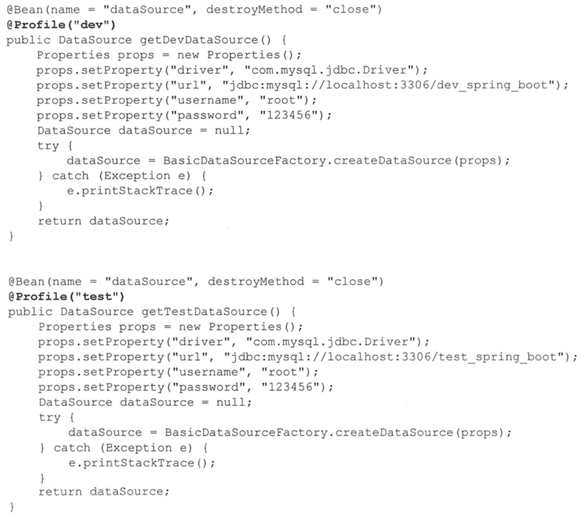
2)在 Java 启动项目中,我们只需要如下配置就能启动Profile机制:
-Dspring.profiles.active=dev

注:Spring 会先判定是否存在 spring.profiles.active 配置后,再去查找 spring.profiles.default 配置的,所以 spring.profiles.active 的优先级要大于 spring.profiles.default
3)按照 springboot 的规则
-Dspring.profiles.active 配置的值记为 {profile} ,则它会用 application-{profiles}.properties 文件去代替原来默认的 application.properties文件
2、使用 Spring EL
1)读取属性文件的值,如:
// ${......} 代表占位符
@Value("${database.driverName}")
String driver
2)记录一个Bean初始化事件,如:
// #{......} 代表启用 Spring表达式,它将具有运算功能;T(......)代表的是引入类
@Value("#{T(System).currentTimeMillis()}")
private Long initTime = null;
//直接赋值: 赋值字符串
@Value("#{‘使用 Spring EL 赋值字符串’}")
private String str = null;
// 科学计数法赋值
@Value("#{9.3E3}")
private double d;
// 其他Spring Bean属性赋值当前的Bean
@Value("#{beanName.str}")
private String otherBeanProp = null;
还可以进行计算、三元运算、比较等。